collect - arrange

Collect Arrange # 1. 2021. Embroidered cotton on velvet, hydrocal, imitation gold leaf, walnut plywood. 96 x 119 x 4.3 cm.

Collect Arrange # 2 2021. Embroidered cotton on velvet, hydrocal, imitation gold leaf, walnut plywood. 96 x 119 x 4.3 cm.

Collect Arrange # 3. 2021. Embroidered cotton on velvet, hydrocal, imitation gold leaf, walnut plywood. 96 x 119 x 4.3 cm.


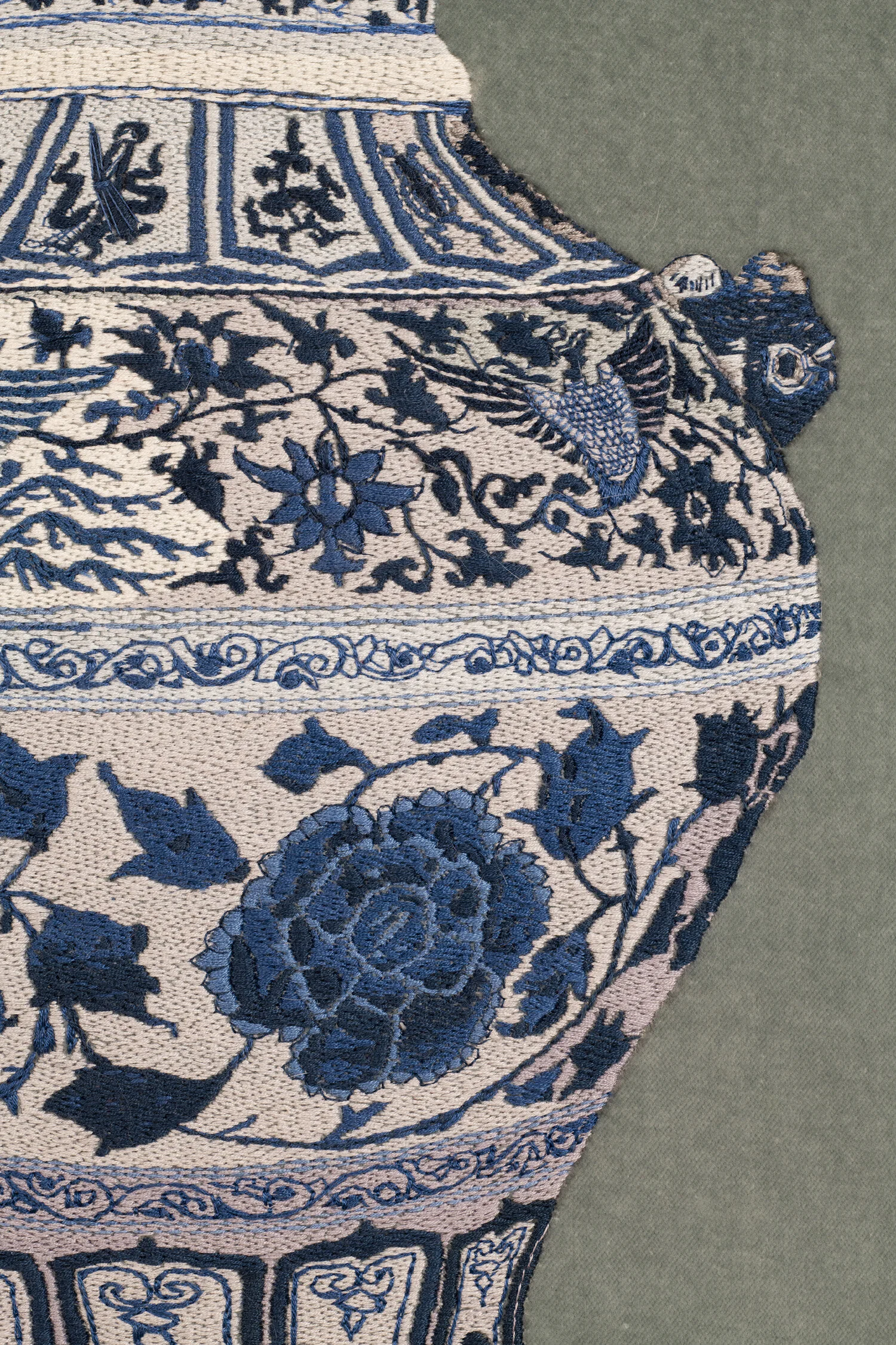
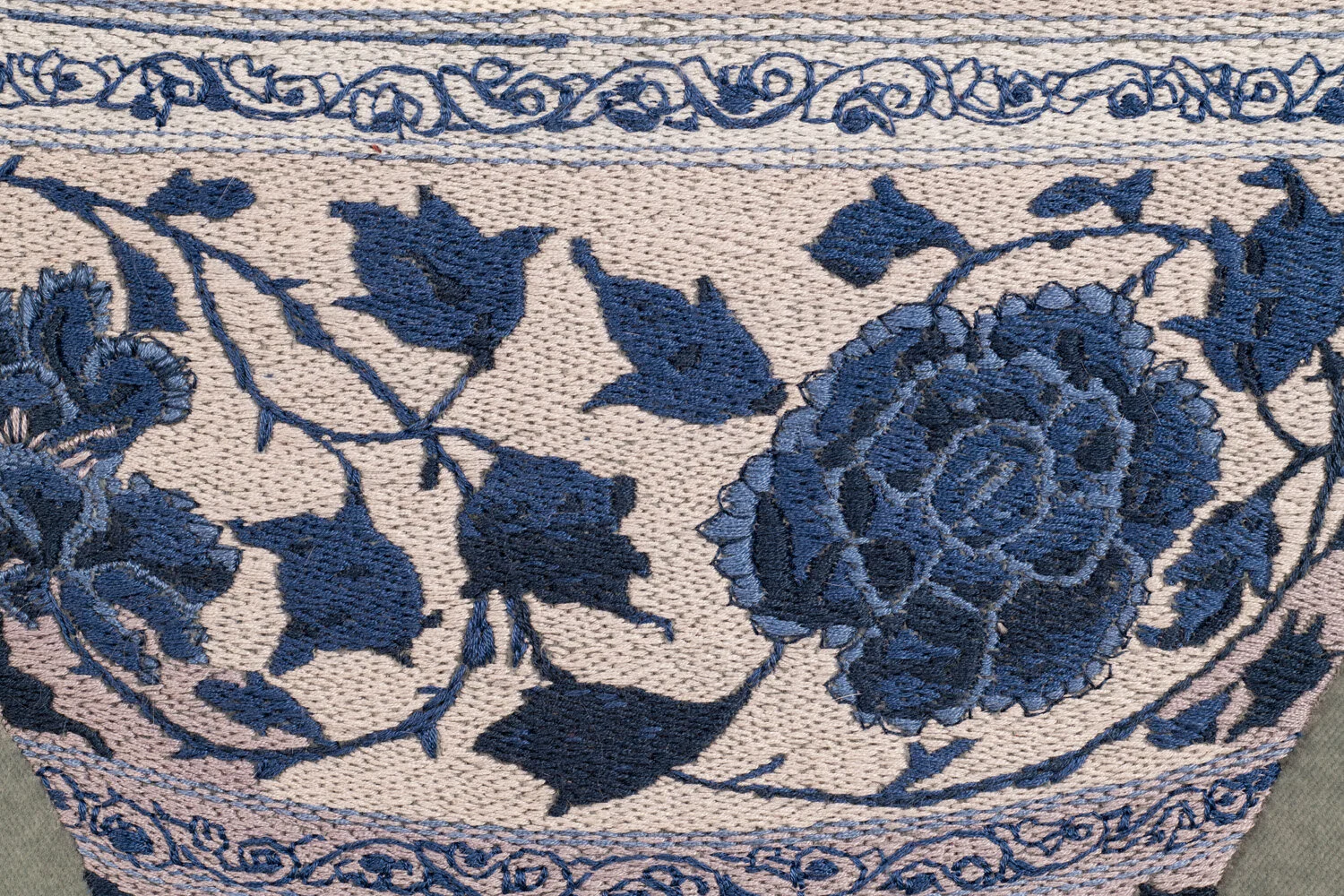


Making sense of where we are now in the Anthropocene involves looking at the history that brought us here, for settlers that must include the roots of colonialism. Museums and taxonomy also have those same roots, in the mindset that allows one to try and collect the world.
Collect-Arrange is a suite of embroidered compositions that incorporate plaster relief sculptures as a framing device. It’s concept is rooted in collecting—the images used were purposefully selected to speak about what is selected to be collected, and about the hierarchies within collections, the unspoken biases at play in any selection process. The Chinese vases depicted in these works are in the collection of the British Museum; they are available to view in online catalogues. The embroideries show the vases at their actual size, measurements readily available on the website. The individual flowers all come from historical botanical illustrations from other British collections. They were created in a pre-photographic age as a tool to collect and identify new species, drawn, and painted to fix a single ephemeral plant specimen in time. All the images are embroidered in approximations of the colours that the original artist or artisan used. The images sculpted in the bas-reliefs depict native Canadian plants and are based on the work of the 19th century Nova Scotian painter Maria Morris Miller from the collection of the Art Gallery of Nova Scotia. Her paintings were published as lithographs, collected in a portfolio for sale in London. Exotic there and then, these are all plants I see regularly on my walks in the woods of Nova Scotia. In Collect-Arrange the images from the new world frame ones collected by the old, the labour of the colonist supports the spoils of the colonizer.
This suite of works incorporates historical objects and imagery, and are made using historical techniques in the embroidery and gold leafed bas-reliefs. They should appear familiar at first glance, as if they would not be out of place in the grand rooms of a museum or historical home. It is my intention that they do so, despite the inevitable doubts as to their propriety that further looking may inspire. The work references the ‘high arts’ of sculpture and easel painting, albeit in the more lowly form of genre imagery, still lifes of domestic objects. Even today the decorative is mistrusted in so-called high art, often seen as frivolous or unserious. This work is purposely decorative and utilizes material and processes associated with ideas of the feminine. The materials used in this work—velvet, gold leaf, embroidery—speak to ideas of wealth and luxury. They are signifiers of power.
The arrangements themselves eschew the more formal floral arrangements that are the subject matter of so many still life compositions, they are meant to feel as though someone took a few flowers and popped them in the nearest vase. Of course, no one would ever be allowed to put water or flowers in these priceless vases. In my compositions I have laboured to create detailed large scale embroidered images, with flowers and vases embroidered to their actual sizes, I, in some ways, become an imagined chatelaine of the collections, ordering the images and objects at my whim.
Many of the problems in today’s world—Capitalism, Colonialism and Global warming—have their roots in the mass exploration by Europeans that took place between the 15th and 19th centuries. ‘Discovering’ new places, peoples, resources, and species of plants and animals led to ways to exploit them. It also led to acquiring new and exotic objects and species. Landscapes changed as the ability to cultivate non-native species developed. ‘Nature’ was reshaped by the desire to collect, and with the planting of exotic species and crops from other continents. Plant collecting changed gardens, medicine, food, and agriculture.
The collecting habit in Europe has it roots in the age of enlightenment and the age of sail. Wealth that was accumulated through the movement and sale of goods and people allowed for the accumulation of private collections of rare and prized objects. Many of these private collections have now entered public collections in our modern museums. They beg the question, what was collected by whom? And for whom?
Sampling theses collections and then embroidering the chosen objects speaks to the absence of women/women’s work from so many collections. Needlework historically was a way for wealthy women to pass the time, they too were part of a collection kept at home while men went off to explore. I am drawn to embroidery because its history, process, and materiality speak to both traditional and contemporary ideas of women’s work. The context of women’s work—so often considered ‘merely’ domestic and social rather than public and political—is ideal for my research, which is feminist at base. It is a rich and vibrant context, for all it’s historical limits. After all, women’s work is never done.
Collect - Arrange #1, 2021
Collect - Arrange #2, 2021
Collect -Arrange #3, 2021
Embroidered cotton on velvet, hydrocal, imitation gold leaf, walnut, plywood.
96 x 119 x 4.3 cm each.
photos Steve Farmer